


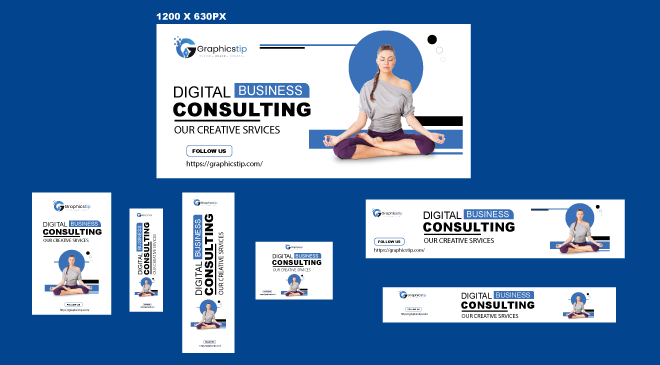
A key element of internet advertising is banner ads. They work as a visual introduction to your company or merchandise, hoping to grab the interest of potential customers and persuade them to take a particular action, such as visiting your website or completing a purchase. You must concentrate on design if you want to produce banner advertising that genuinely stands out and gets results. The art and science of banner ad design will be explored in this piece, along with key ideas and useful advice to assist you in producing engaging and conversion-boosting banners.
Know Your Audience
Having a thorough grasp of your target audience is crucial before beginning the design process. Identify them. What requirements, annoyances, and preferences do they have? You can better customize your banner ad to appeal to your target the more you understand about them. While developing your design concept, take into account purchasing patterns, interests, and demographics.
Establish Clear Goals
Each banner ad must have a clear objective. Your design must support your goals, whether they involve increasing brand recognition, boosting sales, or increasing website traffic. Your banner ad’s content and appearance will be influenced by how clearly you define your objectives.
Understanding Banner Ads
Ads Banner Design
Before diving into the design process, it’s crucial to understand the purpose and elements of a banner ad:
Purpose:
Banner ads are clickable links that lead to your website or landing page. They are designed to swiftly and effectively communicate a message.
- They ought to force users to perform a certain activity, like buying something or subscribing to a newsletter.
- Make Use of High-Quality Images • Your banner ad’s visual element is crucial. The overall impact of the advertisement can be considerably impacted by the use of high-quality photographs or graphics. Select visually appealing and pertinent images for your message. If needed, spend money on expert design or photography.
Elements:
- Text: A succinct, attention-grabbing headline and a succinct, obvious call to action (CTA).
- Imagery: Exceptional pictures that are relevant to your offering.
- Branding: For consistency, use your logo and brand colors.
- Dimensions: Verify that your advertisement fits the dimensions of the platform you’re utilizing.
Choosing the Right Banner Ad Size
The dimensions of banner ads differ between devices and platforms. Selecting the appropriate size is essential if you want to increase exposure and engagement. 300×250, 728×90, 160×600, and 336×280 are common sizes; nevertheless, always confirm the exact specifications of the platform you’re utilizing.
Maintain Consistency with Branding
Your brand is extended by your banner advertisement. Make sure that it stays true to the overall aesthetic and feel of your business. Using the same fonts, color scheme, and style components are all part of this. Maintaining consistency aids in audience trust and brand identification.
Choose the Right Size
There are a variety of sizes for banner advertising, so it’s critical to choose the appropriate one for your campaign. The leaderboard (728×90 pixels), medium rectangle (300×250 pixels), and skyscraper (160×600 pixels) are common sizes for banner ads.
High-Quality Images
The use of images is crucial in drawing in the audience. Make use of excellent graphics or photos that complement your content. A fuzzy or pixelated image can give the impression that your advertisement is amateurish.
Logo:
- Make sure your logo is visible without overpowering the advertisement.
- Verify that it is distinct and easy to understand.
Color Scheme
- To establish visual coherence, use the colors of your brand consistently.
- To make your text and background more readable, choose complementary colors.
- Relentless Branding
Make sure the visual identity of your brand is reflected in your banner ad. To keep your brand consistent, use the same fonts, colors, and design on your website and other marketing collateral. This fosters trust and aids in brand recognition for viewers.
Optimize for Mobile Devices
Make sure your banner ad is mobile-friendly because more and more people are using mobile devices. Verify that the design adjusts to smaller screens without losing legibility. To ensure a consistent and satisfying user experience, test your advertisement across a range of devices.
- Use your brand’s colors consistently to create visual unity.
- Choose complementary colors for your text and background to improve readability.
- A/B Testing
- Not all banner ad designs will be successful. A/B testing can help you achieve the best results possible by producing several ad variations and evaluating how well they work. Try a variety of images, language, calls-to-action, and even color schemes to see what appeals to your audience the best.
Speed and Loading Time
Banner advertising ought to load rapidly to prevent annoying users. Make sure your advertisement doesn’t impede the webpage’s loading speed by optimizing its file size. Users may choose to close an advertisement before it even loads if it loads slowly.
Context:
- Verify that your advertisement is in line with the context or content of the website it is appearing on.
- Adapt your message to the interests of the listeners.
- Take into Account Interactivity and Animation
- Interactive and animated banner ads have the potential to be more captivating. But be careful when utilizing these features—overly intricate animations might be annoying. Make sure the animations complement the advertisement’s message without overpowering the audience.
Responsiveness:
- Create responsive designs that adapt to different screen sizes.
- Ensure text and buttons are easily tappable.
Testing A/B
Optimizing the performance of your banner advertising requires creating and testing different versions:
Track and Analyze Performance
It is essential to use analytics tools to monitor the performance of your banner ad once it goes live. Track data like engagement, conversion, and click-through rates (CTR). Make adjustments to your design and approach for upcoming campaigns based on this data.
Compliance and Legal Considerations
Respect legal and advertising rules by keeping user data safe, disclosing sponsored material, and refraining from making untrue or deceptive claims. Penalties and harm to your brand’s reputation may arise from breaking these regulations.
Tracking and Analytics
Use analytics tools to track the performance of your banner advertising once it is live. Keep an eye on performance indicators like ROI (return on investment), conversion rate, and click-through rate (CTR). Over time, use this data to improve the strategy and style of your ads.
To sum up, creating successful banner advertising is a complex process that calls for a good grasp of your target audience, goal-setting, and adherence to design principles. You may draw in your target audience and accomplish your marketing goals by making visually appealing, succinct, and convincing banner ads. For ongoing success, don’t forget to test and improve your designs, keep up with industry developments, and adjust to the ever-shifting world of digital advertising.